
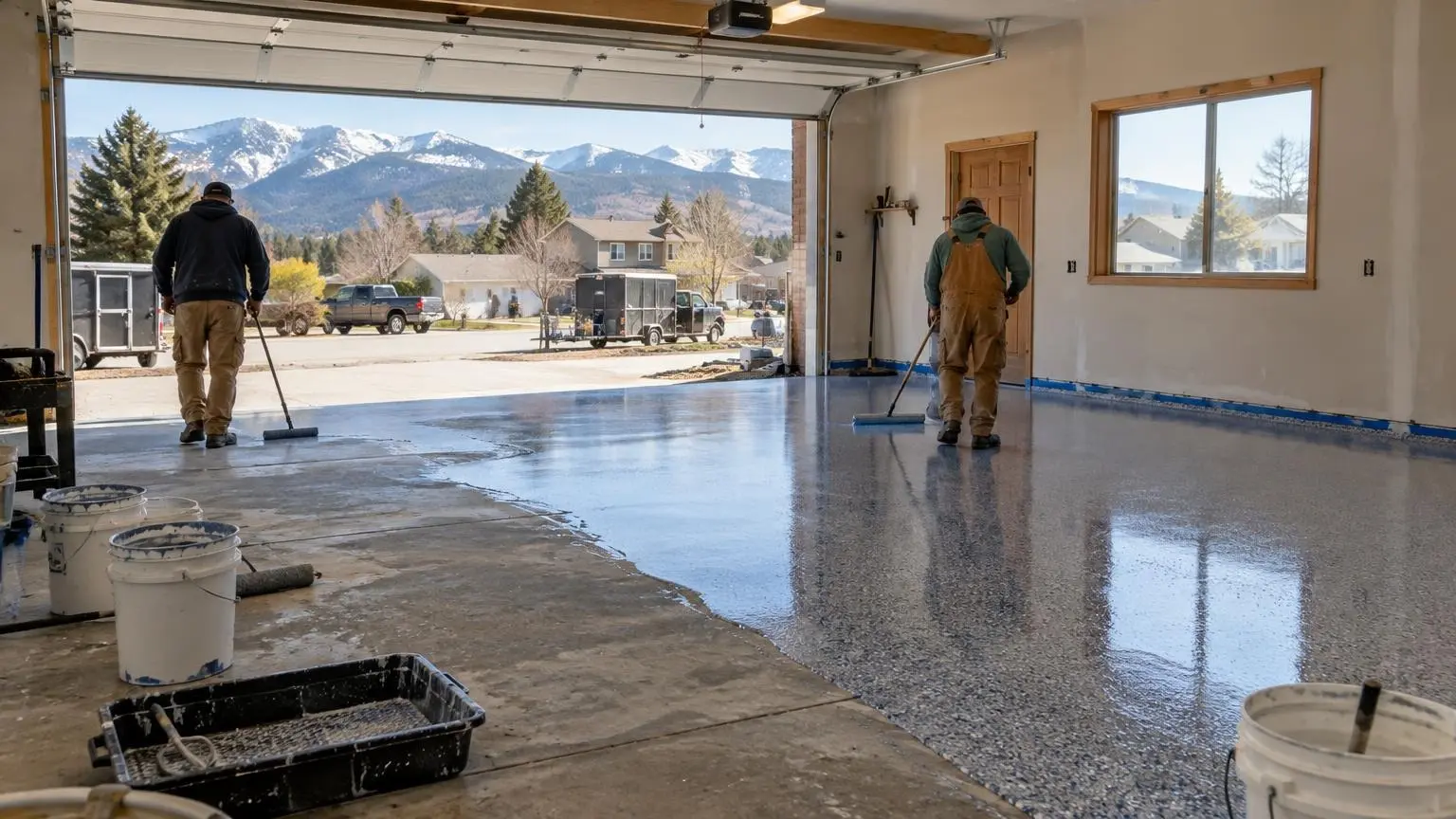
Cracks, flaking, pits and broken joints
Concrete Crack & Floor Repair in Missoula, MT
Fixing the slab first, so the floor on top of it has something solid to hold onto.
- Free on-site estimate with a slab moisture check
- Itemized written quote before any work starts
- Every floor diamond ground and repaired before coating
Repair Is Where Every Good Floor Starts
Concrete crack & floor repair is part of almost every coating job we do, and sometimes it is the whole job. Interior slabs crack as they shrink and settle. Garage floors flake and pit where meltwater sits. Control joints chip under tire and jack wheels. Left alone, those spots grow, collect water and grit, and give any coating a weak edge to peel from.
Why Missoula slabs get damaged
Freeze-thaw is a big part of it. Wikipedia's figures for Missoula show about 45 days a year that stay below freezing and many more nights that dip below it, so water in shallow cracks and pores freezes and thaws over and over. Road treatment adds to it. Missoula County uses a magnesium chloride brine and salted sand, and the 2008 Sutter study for the South Dakota DOT found magnesium and calcium chloride can chemically attack hardened cement paste, causing cracking and loss of strength. The first few feet inside a garage door, where brine collects, usually show it first.
Types of damage we repair
- Hairline and shrinkage cracks: cleaned out and filled so they do not telegraph through a coating.
- Wider and moving cracks: routed and filled with flexible or rigid material, depending on whether the crack is still moving.
- Flaking and scaling: weak surface ground off, then rebuilt with a repair mortar or resurfacer.
- Spalls and pits: broken areas cut back to sound concrete and patched level.
- Control joints: chipped edges rebuilt, and joints filled or left open as the slab requires.
Telling a cosmetic crack from a structural one
Most garage and basement cracks are cosmetic: thin, flat, and not getting wider. Others point to something bigger. Signs to watch for include one side of a crack sitting higher than the other, cracks that keep widening, water coming through, or doors that no longer close because the slab moved. HomeAdvisor notes that foundation repair is a different job, often costing $2,150 to $7,730 or more. If we see signs of structural movement, we tell you that before quoting a floor.
Repair before coating
Every coating we install gets repair as part of the prep. After diamond grinding opens the surface, we fill cracks and pits, rebuild flaked areas and level low spots that would hold water. On a flake floor, small repairs disappear under the finish. On a solid color or metallic floor, repaired cracks can show faintly, and we explain that up front.
Repair as its own job
Not every repair has to lead to a coating. If you just want a cracked, pitted garage floor fixed and sealed, or a few broken joints rebuilt in a shop, we can quote that on its own. HomeAdvisor lists simple patching at $25 to $250 and broader resurfacing at $1,000 to $5,000, depending on the size of the space.
What This Covers
Repairs are matched to the type of damage and whether a coating is going on top.
Crack filling
Cleaning, routing where needed, and filling with flexible or rigid material.
Flaking and scaling repair
Grinding off weak surface and rebuilding it with repair mortar or resurfacer.
Spall and pit patching
Cutting back to sound concrete and patching level.
Joint rebuilding
Repairing chipped control joint edges and filling joints where appropriate.
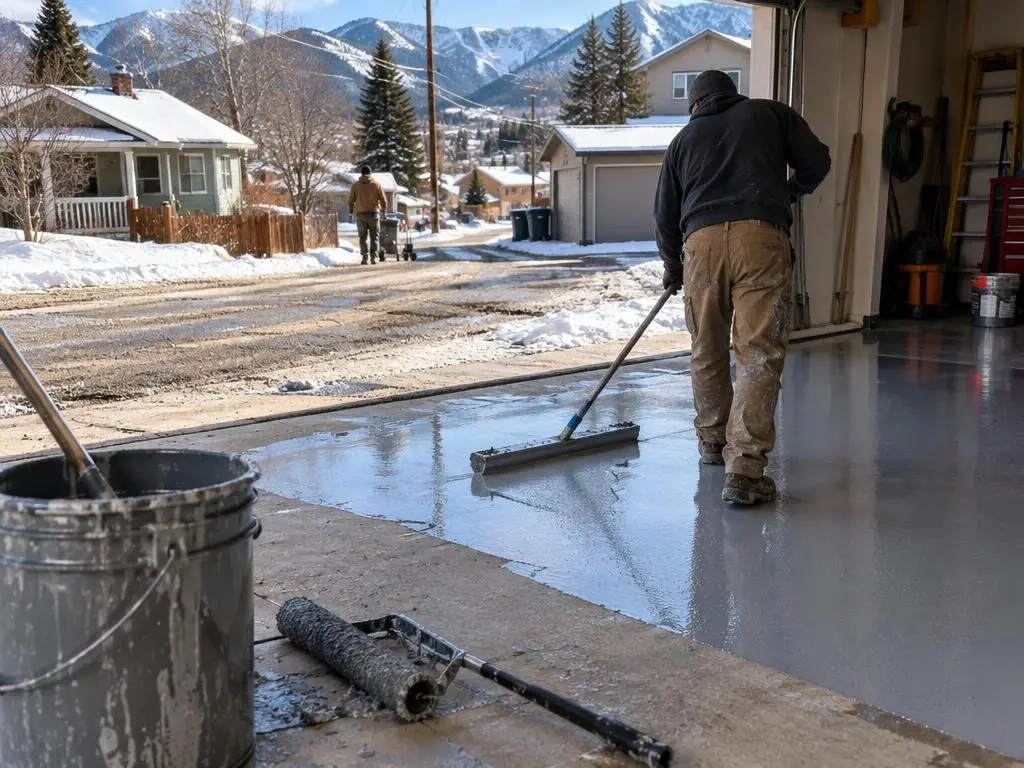
Typical Concrete Repair Costs
| Repair | Published range |
|---|---|
| Patching cracks and chips | $25 to $250 |
| Concrete resurfacing, whole space | $1,000 to $5,000 |
| Resurfacing, per square foot | $3 to $7 |
| Foundation repair (structural, for comparison) | $2,150 to $7,730 or more |
National ranges from HomeAdvisor and HomeGuide. Some contractors set a minimum charge for small repairs. Your written estimate is the price.
How It Works
1. Map the damage
We mark cracks, flaking, spalls and joints, and check for signs of movement.
2. Open it up
Damaged areas are ground or cut back to sound concrete.
3. Fill and rebuild
Cracks are filled and surfaces rebuilt with the right repair material.
4. Finish
The repair is ground flush and sealed, or prepped for a coating.
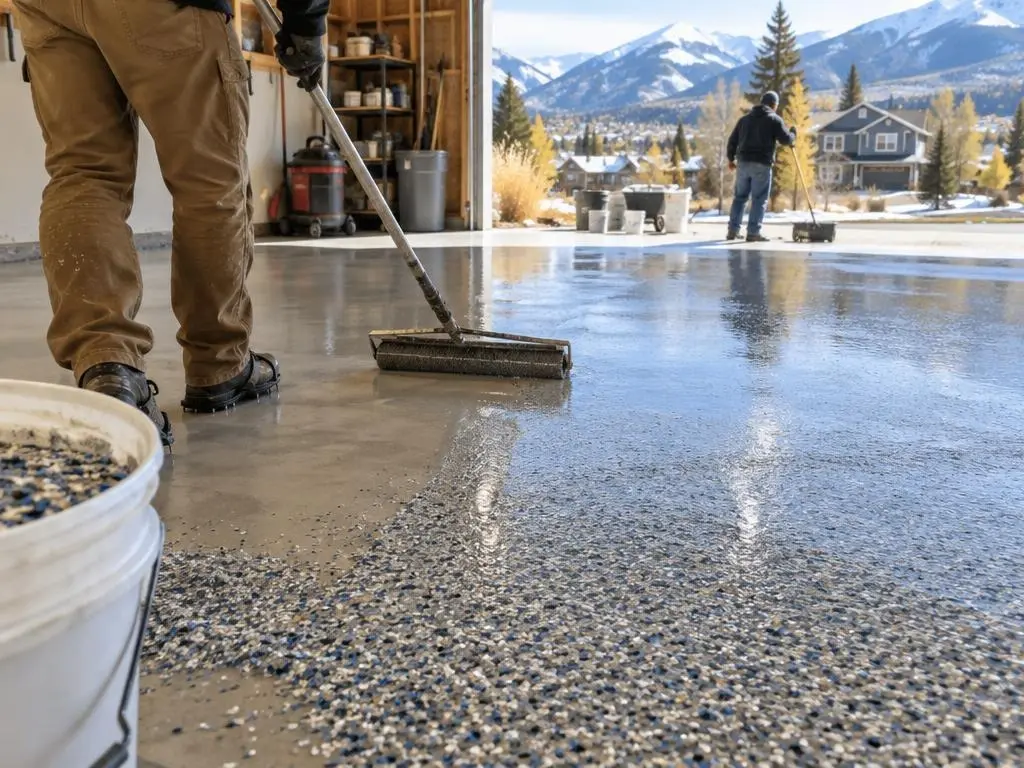
Concrete Crack & Floor Repair Questions
Will a crack come back through a coating?
A properly filled shrinkage crack usually stays hidden, especially under flakes. A crack that is still moving can reflect through any rigid coating, which is why we check for movement and use flexible fill where it is needed.
Can you fix a flaking garage floor without replacing it?
In most cases, yes. We grind off the weak surface and rebuild it with a repair mortar or resurfacer, then coat it. A slab that is breaking up deep or heaving may need replacement instead.
How much does concrete crack repair cost?
HomeAdvisor lists patching cracks and chips at $25 to $250, and resurfacing at $1,000 to $5,000 depending on size. We price your floor after we see it.
When is a crack a structural problem?
Watch for cracks that keep widening, one side sitting higher than the other, water coming through, or doors that stop closing. Those call for a structural assessment, and we will say so rather than coat over them.
Concrete Crack & Floor Repair Service Areas
- Epoxy Flooring in Missoula, MT
- Epoxy Flooring in Orchard Homes, MT
- Epoxy Flooring in Wye, MT
- Epoxy Flooring in East Missoula, MT
- Epoxy Flooring in Bonner-West Riverside, MT
- Epoxy Flooring in Piltzville, MT
- Epoxy Flooring in Turah, MT
- Epoxy Flooring in Lolo, MT
- Epoxy Flooring in Carlton, MT
- Epoxy Flooring in Florence, MT
- Epoxy Flooring in Stevensville, MT
- Epoxy Flooring in Victor, MT
- Epoxy Flooring in Frenchtown, MT
- Epoxy Flooring in Huson, MT
- Epoxy Flooring in Alberton, MT
- Epoxy Flooring in Clinton, MT
- Epoxy Flooring in Evaro, MT
- Epoxy Flooring in Arlee, MT
Get a Concrete Crack & Floor Repair Estimate
Free estimates for concrete repair around Missoula.