
Chip finishes for valley garages and shops
Epoxy Flake Floors in Missoula, MT
A textured, multi-color floor that keeps winter sand and dried mag brine from showing every day of the season.
- Free on-site estimate with a slab moisture check
- Itemized written quote before any work starts
- Every floor diamond ground and repaired before coating
A Chip Finish for Sand-and-Brine Winters
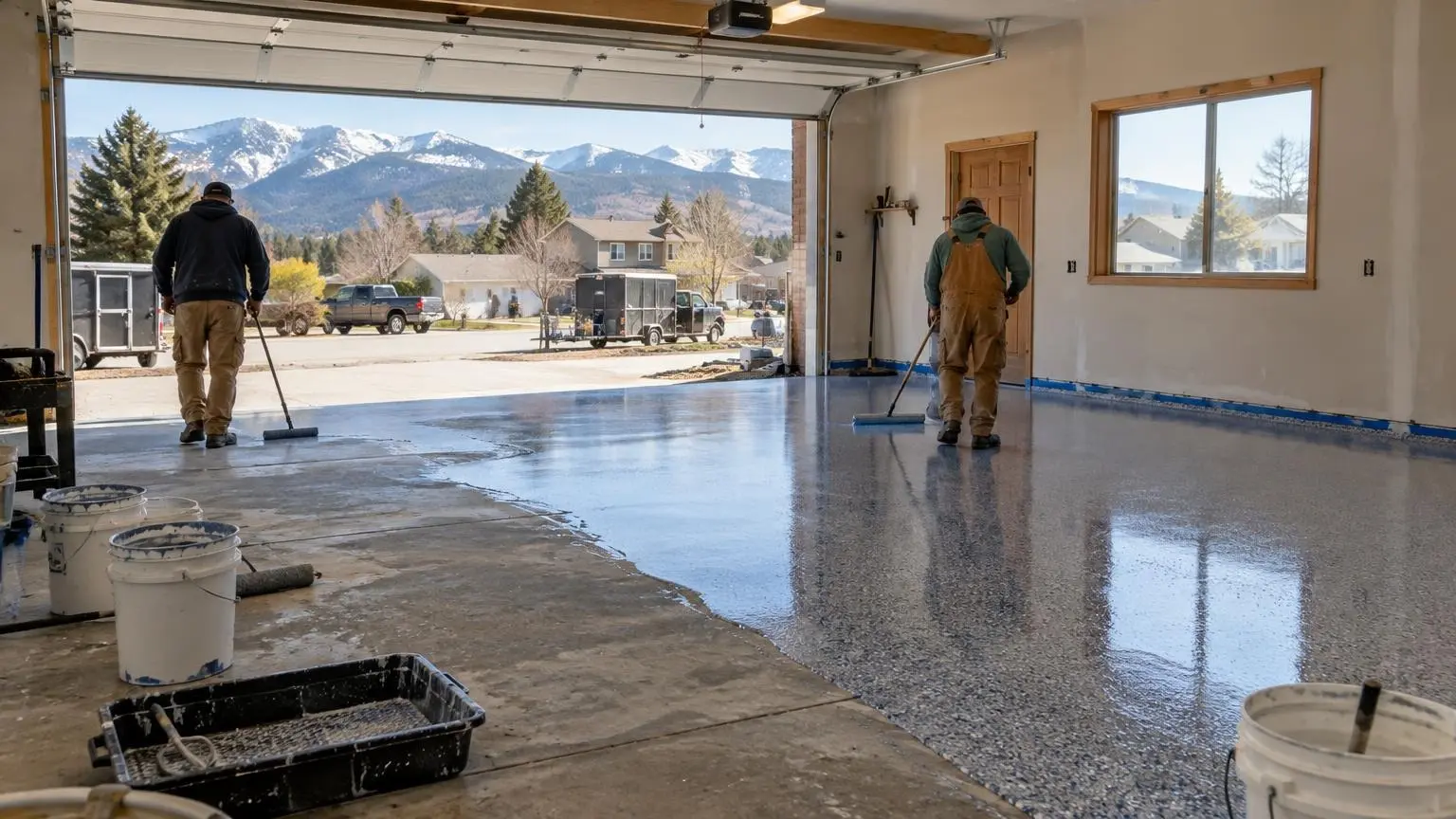
Epoxy flake floors are the finish we put down most in Missoula garages. Snow sits on the ground here about 120 days in a typical year, per Wikipedia's climate figures, and for much of that stretch your tires drag in traction sand and dried brine. A flake floor is a resin system with thousands of colored vinyl chips locked into it. The speckled pattern hides that winter film between washes, and the chips give the surface a slight tooth underfoot.
How the layers stack up
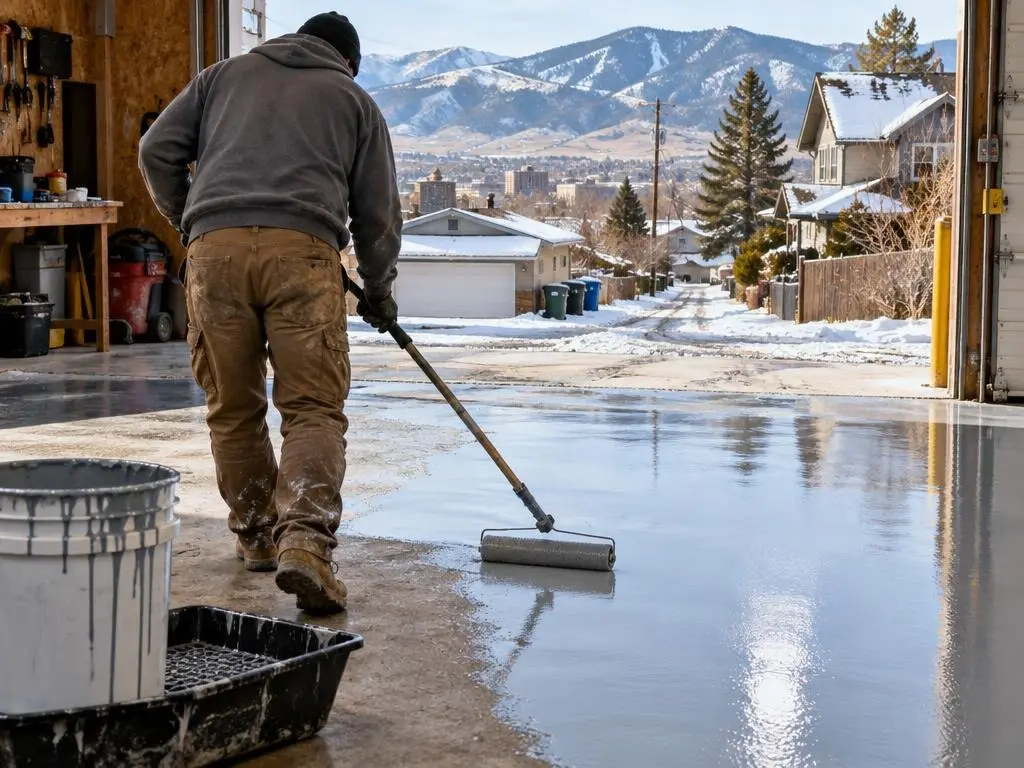
We start on bare, diamond-ground concrete with its cracks and pits already filled. A tinted epoxy or polyaspartic base is rolled out one section at a time. While each section is still wet, we toss chips over it by hand. After it hardens, we run a steel blade across the whole floor to knock off any chip standing on edge, then vacuum the loose ones away. A clear topcoat goes over everything and seals the chips in. Skip a step and the floor ends up rough or patchy.
Sand is the real test here
City crews spread sand once it gets colder than about 18 degrees, NBC Montana reported, and Missoula County mixes salt into its sand at roughly 1 part to 15. That grit rides in on your tread and gets twisted into the floor every time you turn the wheel. On a thin paint or kit coating, it wears a dull path within a season or two. On a flake floor the wear lands on the clear topcoat, which is thick and hard. When that layer finally looks tired years later, we can clean it, scuff it and roll on a new one without touching the chips.
Brine haze and the blend you pick
The county also uses a magnesium chloride brine of about 32 percent. When it dries on a floor it leaves a pale haze. Blends that mix a dark chip, a mid-tone and a light one hide that haze well. All-gray or all-white floors give it away fast. If your garage has a single ceiling bulb, like many older alley garages near downtown, a lighter blend will brighten the space, though you will mop more often. We leave sample boards with you so you can look at them in morning and evening light.
Coverage and chip size
Most garages get chips to full rejection. That means we keep throwing until the wet base will not hold any more. It gives the most grip and the most hiding power. A lighter scatter over a solid color suits a basement rec room or hobby space where looks matter more than grit. Chip size changes the feel of the room too. Quarter-inch chips read as a fine speckle, and larger ones look bolder from the doorway.
Alley garages, new subdivisions and shops on acreage
Missoula's median home was built in 1981, according to Census survey figures summarized by Point2Homes, and about 13 percent of homes date to 1939 or earlier. An old alley garage often has a thin, uneven slab with paint on it, so grinding and patching take longer. A newer attached garage on the valley floor may still carry a builder's cure-and-seal that has to come off. Metal-sided shops out toward Frenchtown and Lolo bring oil and hydraulic fluid, which we degrease and grind out before any resin goes down.
Keeping chip waste out of the aquifer
The Missoula Valley aquifer is an EPA sole-source aquifer and supplies the valley's drinking water. Our grinders run with a vacuum attached. Scraped chips, dust and leftover resin get bagged and leave with us. Nothing is rinsed into a floor drain, the gutter or the yard.
Day-to-day care
A push broom or wide dust mop picks up sand. Through the winter, squeegee meltwater out the door and hose the floor every few weeks so brine does not build up. Use a pH-neutral cleaner. Citrus degreasers and stiff scrub brushes will dull the clear coat over time.
Parts of a Flake System
Five pieces go into every chip floor we install in the valley.
Concrete profile
Wall-to-wall diamond grinding, with oil spots degreased and old sealer taken off.
Patch work
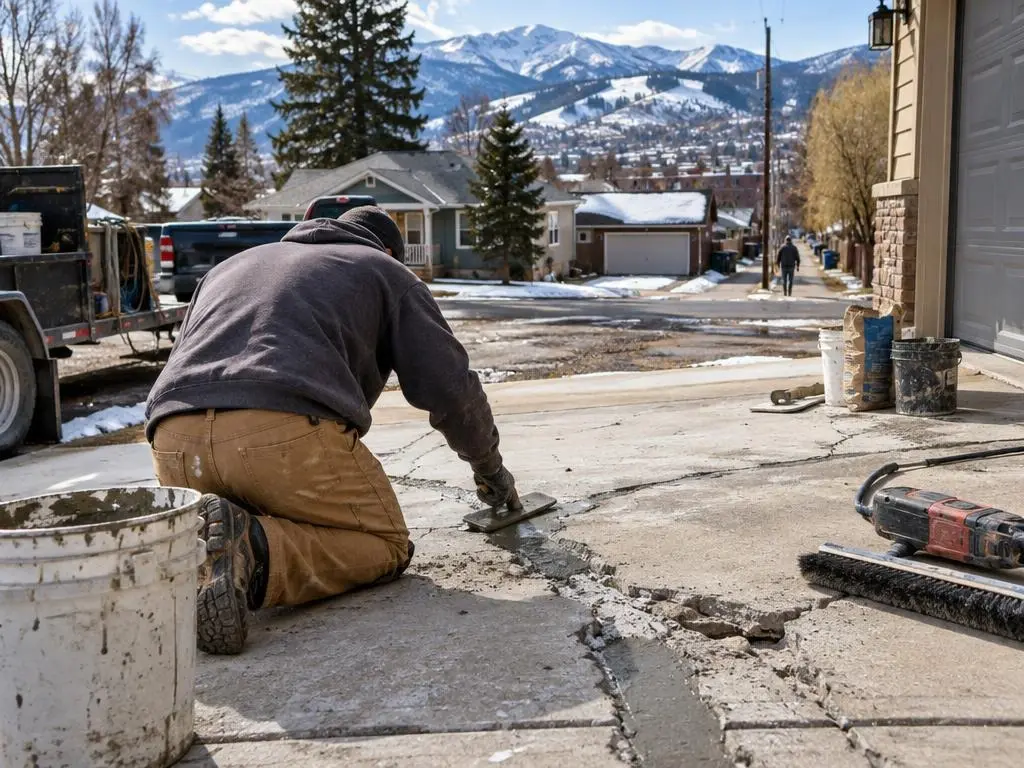
Cracks, pits and chipped joints filled and ground level with the slab around them.
Color base
A tinted resin coat matched to the chip blend so thin spots never show gray.
Vinyl chip layer
Chips spread by hand to full rejection or a light scatter, then blade-scraped and vacuumed.
Clear wear layer
A polyaspartic or urethane topcoat sized for traction, tire wear and any sun the floor gets.
What Flake Floors Cost
| Scope | Range from published guides |
|---|---|
| Epoxy system, installed, each sq ft | $4 to $10 |
| Polyaspartic system, installed, each sq ft | $5 to $12 |
| Chip or custom color upcharge, each sq ft | $0.50 to $2.00 |
| Epoxy over a typical two-car garage | $1,600 to $5,800 |
| Polyaspartic over a typical two-car garage | $2,000 to $6,900 |
Figures come from HomeGuide's national cost guides for epoxy and polyaspartic floors. A full chip floor tends to sit in the middle or upper half of those ranges because it takes more material and labor. We price your floor after we see it, and the written estimate is the price.
From Estimate to Parking
1. Walk the slab
We measure, check moisture and look at cracks, oil and old coatings, with chip boards in hand.
2. Grind and patch
Diamond grinding with vacuum dust capture, then crack and pit repair.
3. Base and chips
Tinted base rolled in sections, with chips spread into each one while it is wet.
4. Blade, vacuum, clear coat
Loose chips come off, then the clear layer is applied and left to cure.
Epoxy Flake Floors Questions
What chip blend hides Missoula road sand?
A blend with three or more colors, mixing dark, mid and light chips, hides sand and mag brine haze the longest. Single-tone gray or white blends show it within days.
Can you put down a flake floor in winter?
Often, yes. HomeGuide lists polyaspartic as workable from -30°F to 140°F. Epoxy needs a warmer slab. In an unheated garage we check the slab temperature and pick the product that suits that week.
Will a chip floor work in my pole barn or shop?
Yes, as long as the slab is sound and we can get the oil out. Floors soaked with hydraulic fluid may need extra degreasing and grinding. Heavy equipment may call for a thicker build, which we cover on our shop floor page.
What happens when the topcoat wears thin?
The chips sit under the clear layer, so wear shows up there first. If the base is still bonded, we clean and scuff the floor and roll a fresh topcoat without grinding out the chips.
Epoxy Flake Floors Service Areas
- Epoxy Flooring in Missoula, MT
- Epoxy Flooring in Orchard Homes, MT
- Epoxy Flooring in Wye, MT
- Epoxy Flooring in East Missoula, MT
- Epoxy Flooring in Bonner-West Riverside, MT
- Epoxy Flooring in Piltzville, MT
- Epoxy Flooring in Turah, MT
- Epoxy Flooring in Lolo, MT
- Epoxy Flooring in Carlton, MT
- Epoxy Flooring in Florence, MT
- Epoxy Flooring in Stevensville, MT
- Epoxy Flooring in Victor, MT
- Epoxy Flooring in Frenchtown, MT
- Epoxy Flooring in Huson, MT
- Epoxy Flooring in Alberton, MT
- Epoxy Flooring in Clinton, MT
- Epoxy Flooring in Evaro, MT
- Epoxy Flooring in Arlee, MT
Get a Epoxy Flake Floors Estimate
Free estimates and chip samples across Missoula, the Bitterroot and the Clark Fork valley.